

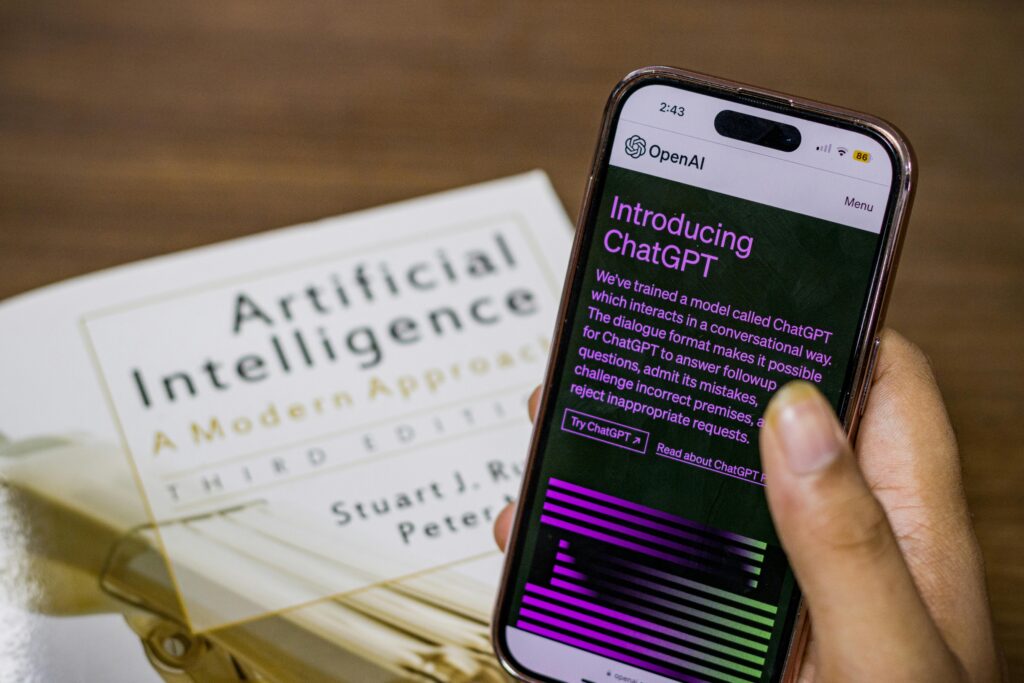
Artificial intelligence is changing due to multimodal AI, which enables systems to comprehend and process various kinds of data simultaneously. Modern AI systems that handle text, voice, and images incorporate data from several modalities, including text, audio, graphics, and video, to produce more accurate and context-aware results than classic models that rely on a single input. Multimodal AI is a significant advancement in the future of AI technology since it produces better, more dependable, and human-like interactions by learning from a variety of data sources.
Why Multimodal AI Is in the News?
Multimodal AI enables more natural and human-like interactions by processing text, images, voice, and video at the same time. By automating difficult jobs like medical diagnosis, predictive maintenance, and customer sentiment recognition, this most recent AI technology is revolutionising many industries. Multimodal AI developments now include on-device processing for improved privacy due to the market’s explosive expansion and increased investment. Concerns about deepfakes, prejudice, and data security, however, continue to influence business conversations.
Multimodal AI Tools
Multimodal artificial intelligence is already being improved by a number of cutting-edge methods.
- Google Gemini can generate, comprehend, and improve content by integrating text, graphics, and other modalities.
- Google Cloud’s machine learning platform is called Vertex AI. Additionally, it is capable of processing various types of data and carrying out operations such as image recognition, video analysis, and more.
- OpenAI’s CLIP is capable of processing text and images for tasks like image captioning and visual search.
- By processing speech, text, and visuals, Hugging Face’s Transformers can facilitate multimodal learning and create adaptable AI systems.
Tech Corporations Are Rushing To Develop Multimodal AI Systems
OpenAI is leading the race with GPT-4o while tech behemoths compete fiercely to control multimodal AI trends. In contrast to previous methods that relied on numerous models, this model stands out in the most recent AI technology environment since it can natively handle text, audio, and video within a single system. Faster reactions and more human-like interactions are made possible by this development. Simultaneously, businesses are introducing AI wearables that demonstrate practical multimodal uses, like the Humane AI Pin, Rabbit R1, and Meta Ray-Ban smart spectacles. The way people engage with intelligent systems across platforms and devices is expected to change as multimodal AI develops.
What Is Multimodal AI?
Artificial intelligence that can comprehend and interpret numerous data kinds simultaneously, including text, images, audio, and video, is known as multimodal AI. Compared to single-data (unimodal) AI systems, it produces more precise, context-aware, and human-like replies by mixing these inputs.
How Multimodal AI Works Behind the Scenes
The next development in artificial intelligence is multimodal AI, which can analyse and comprehend text, images, audio, and video at the same time. Modern AI systems that handle text, voice, and graphics can produce outputs that are more accurate, context-aware, and human-like than classical AI, which only uses one modality. Multimodal AI models are revolutionising industries such as healthcare, finance, autonomous vehicles, and interactive digital assistants by integrating many data sources. Let’s examine these system operations in detail.
1. Receiving Various Data Types in the Input Module:–
Gathering input from several sources is the first stage of any AI model. This may consist of:
- Text: Questions, commands, or documents
- Pictures: Pictures, screenshots, or scans of the body
- Audio: Environmental noises, music, or speech
- Video: Sensor inputs, short films, or surveillance feeds
- Specialised neural networks:— Such as transformers for text, CNNs for images, and audio networks for sound—are used to process each input independently. This enables significant features to be extracted from each modality by the AI.
2. Preparation and Encoding:-
Each modality is transformed into a numerical representation that the AI can comprehend after it has been gathered. This stage entails:’
- Making text embeddings
- Creating feature maps for pictures
- Creating spectrograms from audioTaking frames or patterns out of a video
- This guarantees that in the following phase, all input types—regardless of format—can be combined and compared.
3. Fusion Module: Integrating the Information:-
The core of multimodal AI is the fusion module. In order to comprehend correlations across modalities, the system combines data from all of them. Among the fusion procedures are:
- Early fusion: Integrates all inputs’ raw features
- Late fusion: Merges results from different unimodal models.
- Hybrid fusion: For increased precision, it combines early and late fusion.
- The AI may produce more reliable, context-aware predictions by linking modalities, such as the word “dog” in text, to features in a picture.
4. Processing and Reasoning:-
Following fusion, the AI looks for trends and correlations in the combined data. Contemporary multimodal AI models can learn intricate correlations between words, images, and sounds by reasoning across modalities. This enables sophisticated features like:
- Responding to visual inquiries
- Interpreting pictures while translating speech
- Using multimodal patient data to forecast healthcare outcomes
5. Module for Output: Producing Reactions:-
Lastly, the output module uses the fused data to generate answers. This latest model of AI is capable of producing outputs in several formats:
- Text: Captions or descriptive responses
- Image: Annotated images or highlighted items
- Audio: Spoken answers
- Video: Predictive or animated visual results
- Multimodal AI is crucial for interactive, practical applications because of its adaptability.
Flowchart: How Multimodal AI Works
A[Input Module: Text, Images, Audio, Video] --> B[Encoding / Preprocessing] B --> C[Fusion Module: Early, Late, Hybrid Fusion] C --> D[Reasoning / Processing: Identification of Patterns and Cross-Modal Comprehending] D --> E[Output Module: Text, Image, Audio, Video]Flowchart Interpretation:
– Input Module: Acquires various kinds of information.
– Encoding / Preprocessing : Converts input into numerical representations.
– Fusion Module: Integrates all modalities to provide a more comprehensive insight.
– Reasoning and Processing: Identifies trends and connections.
– Output Module: Generates responses that are human-like and context-aware.
Challenges & Ethical Concerns
Multimodal AI has a number of drawbacks and restrictions, even though it can handle more complicated issues than unimodal systems.
1. Increased Data Needs
One of the difficulties with this latest AI model is the requirement for enormous volumes of varied data in order to properly train the model. These datasets are costly and time-consuming to collect, label, and manage, which raises development costs.
2. Fusion and Alignment of Data
Different noise levels and temporal misalignment make it challenging to merge numerous modalities, including text, pictures, audio, and video. One of the biggest technological challenges is still correctly merging data and aligning inputs that represent the same time or context.
3. Multimodal Interpretation
It is necessary to comprehend the semantic links between text, audio, and visuals in order to translate content across several modalities, such as creating an image from a text description. One of the main challenges is ensuring appropriate multimodal representation.
4. Privacy and Ethical Issues
In multimodal AI, AI ethics are crucial. Unfair outcomes based on gender, colour, religion, or other characteristics may result from biases in training data. Furthermore, because these models may be trained on sensitive data, such as financial or personal information, data privacy is a significant concern.
5. Robustness & Representation
Reliability and consistency across tasks are limited by the challenges of handling missing data, excessive noise, and integrating information from many modalities.
Why Multimodal AI Matters
- By combining many data sources into a single system, multimodal AI enables AI systems that process text, voice, and images to provide outputs that are more precise, human-like, and context-aware.
- These models may reason across modalities using the most recent AI technology, which enhances decision-making, lowers ambiguity, and permits creative applications across sectors.
Multimodal AI in the future?
By enabling AI systems that handle text, audio, and images to comprehend and process several data kind at once, multimodal AI is influencing the direction of technology. As intelligent assistants, sophisticated multimodal AI models such as Gemini can comprehend text, graphics, and voice and even produce high-quality code. This development makes AI more context-aware, human-like, and a crucial component of the newest AI technology, improving sectors like healthcare, education, and autonomous cars.
Conclusion
By enabling AI systems that handle text, voice, and images to interpret many data sources at once, multimodal AI is transforming artificial intelligence. Multimodal AI models, in contrast to conventional unimodal systems, combine text, images, audio, and video to produce context-aware, human-like outputs for a variety of industries, including healthcare, finance, autonomous cars, and education. Cutting-edge tools like Google Gemini, OpenAI CLIP, and Vertex AI demonstrate how this newest AI technology improves interactive apps, predictive analysis, and content production. Multimodal AI is still expanding despite obstacles, including prejudice, data privacy, and high cost, offering more intelligent, user-friendly, and adaptable AI solutions globally.
[…] video, and sensor data rather than depending just on one input, such as text or visuals. These multimodal AI applications are among the most influential real-world AI examples available today because they mimic how humans […]